


PeopleXperience blog
Vamos falar de jornada do cliente?


The evolution of customer experience management
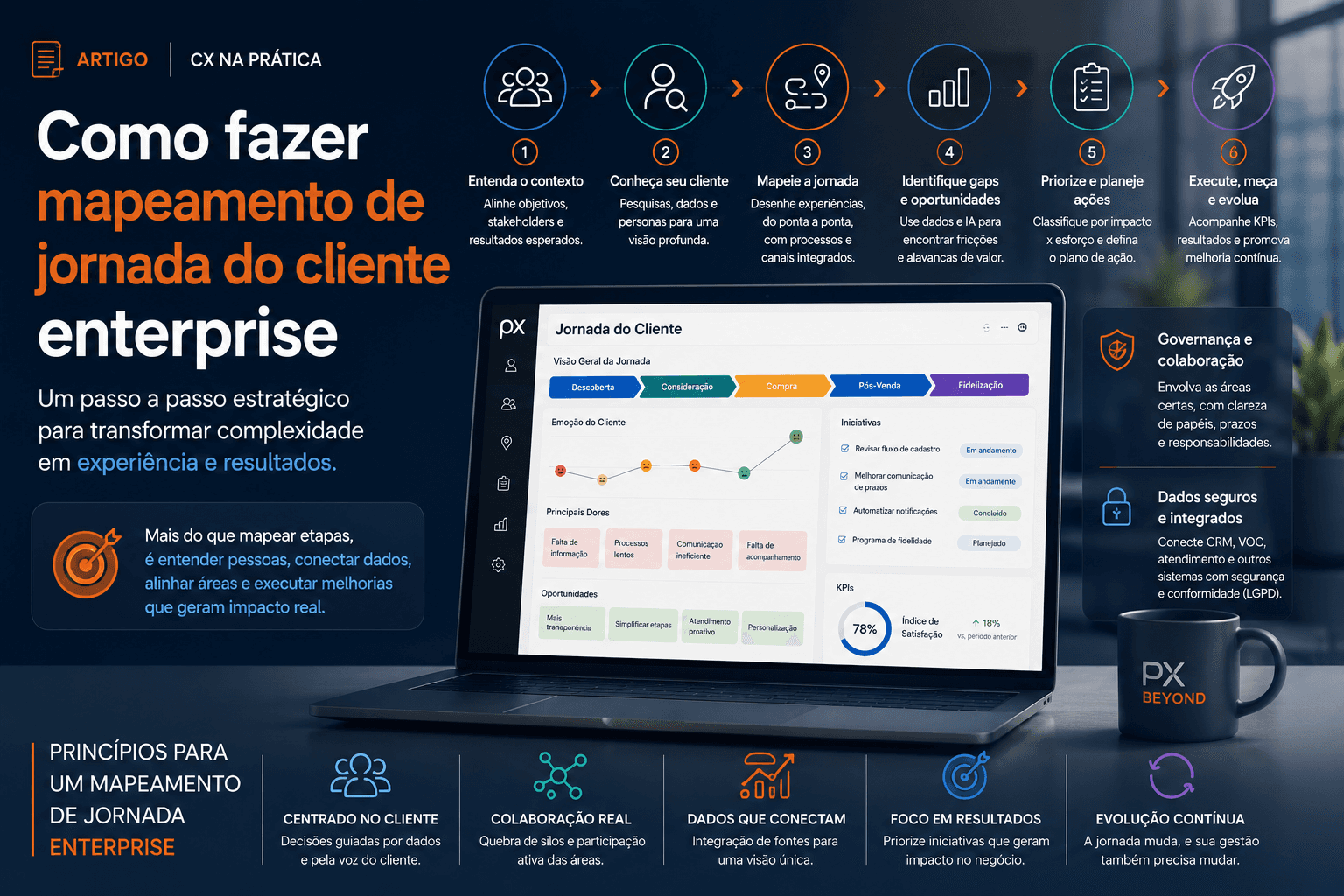
The market has evolved. Mapping the journey and putting it on the wall no longer generates competitive advantage. In the “old way,” data becomes fragmented, departments work in silos, and decisions take time. With PX Beyond, you integrate signals from CRM, research, and service, keep a live journey, and transform insights into actions with centralized governance: responsible parties, deadlines, evidence, and indicators. The result: less friction, more predictability, and an experience that moves from static design to execution, with assisted AI (human-in-the-loop) and orchestration.

The evolution of customer experience management
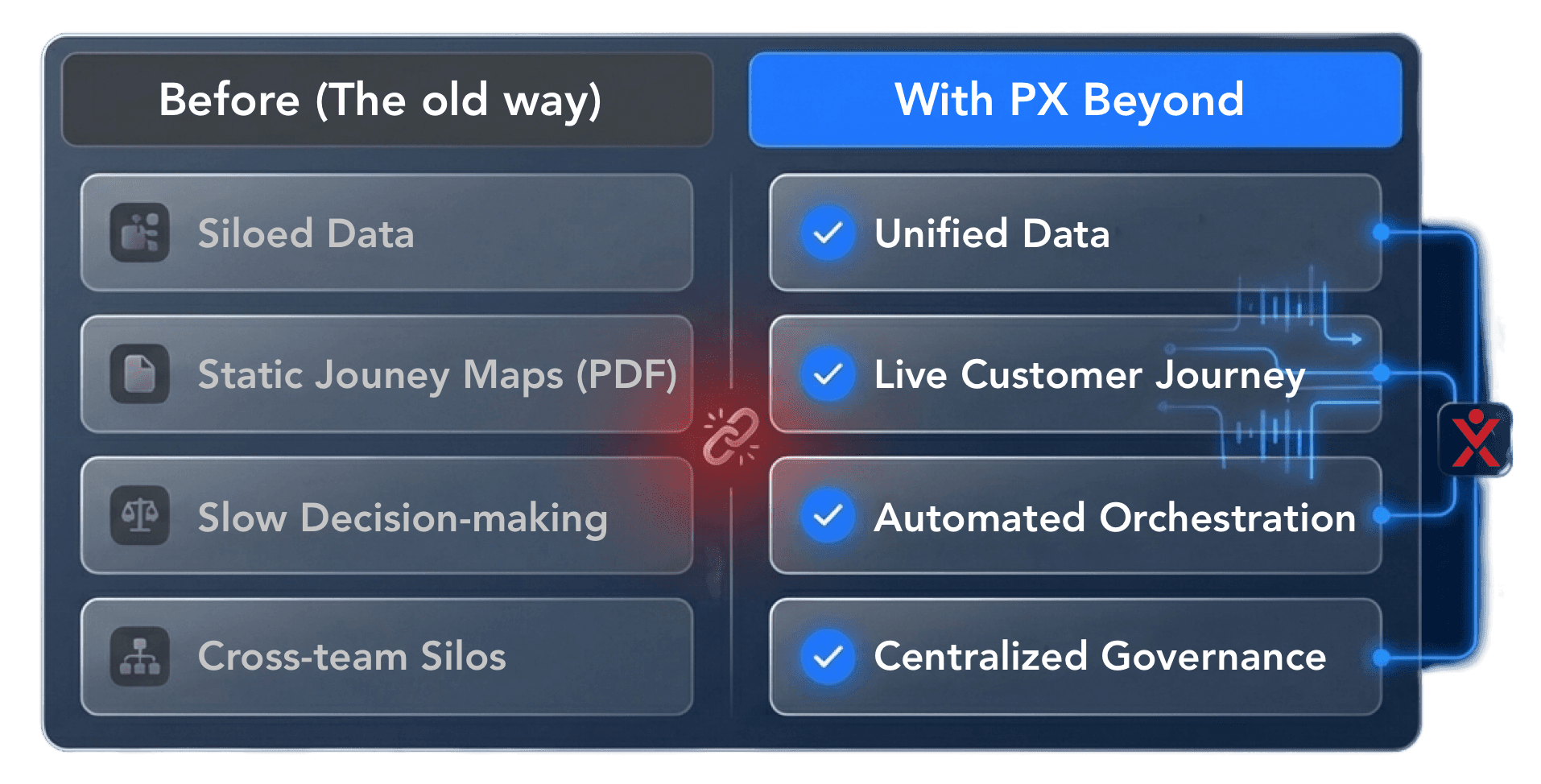
The market has evolved. Mapping the journey and putting it on the wall no longer generates competitive advantage. In the “old way,” data becomes fragmented, departments work in silos, and decisions take time. With PX Beyond, you integrate signals from CRM, research, and service, keep a live journey, and transform insights into actions with centralized governance: responsible parties, deadlines, evidence, and indicators. The result: less friction, more predictability, and an experience that moves from static design to execution, with assisted AI (human-in-the-loop) and orchestration.
The evolution of customer experience management
The market has evolved. Mapping the journey and putting it on the wall no longer generates competitive advantage. In the “old way,” data becomes fragmented, departments work in silos, and decisions take time. With PX Beyond, you integrate signals from CRM, research, and service, keep a live journey, and transform insights into actions with centralized governance: responsible parties, deadlines, evidence, and indicators. The result: less friction, more predictability, and an experience that moves from static design to execution, with assisted AI (human-in-the-loop) and orchestration.